
Supporting homeowners and businesses throughout the metro
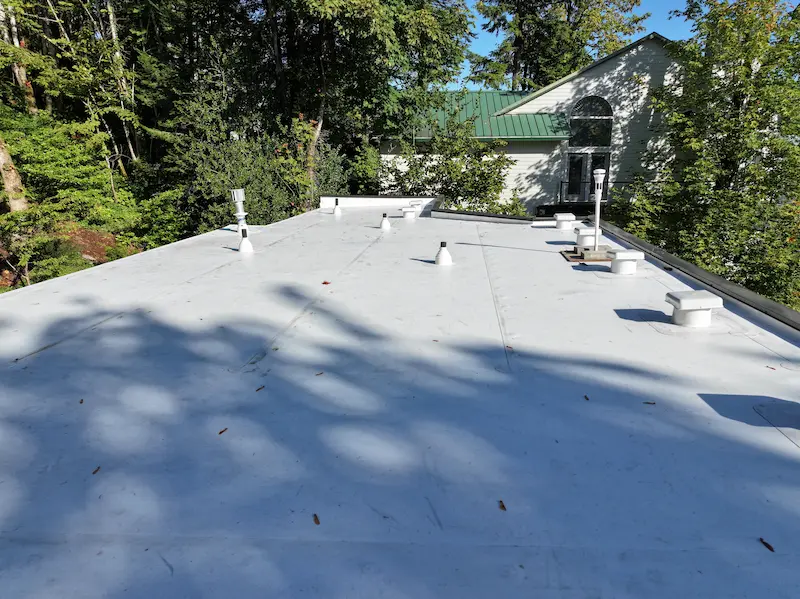
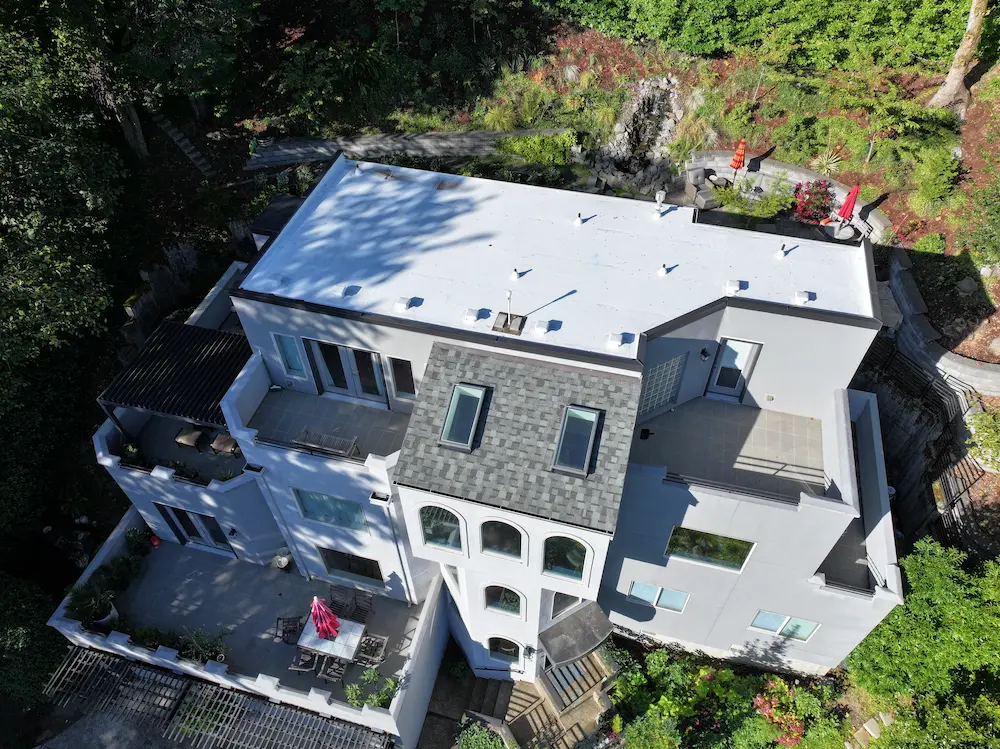
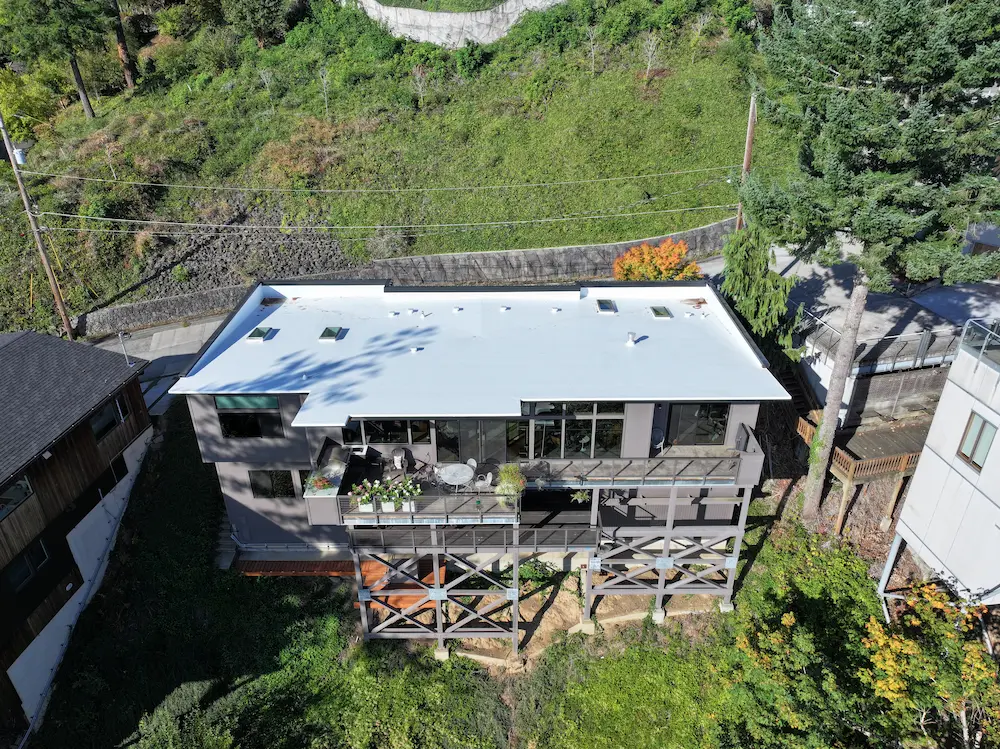
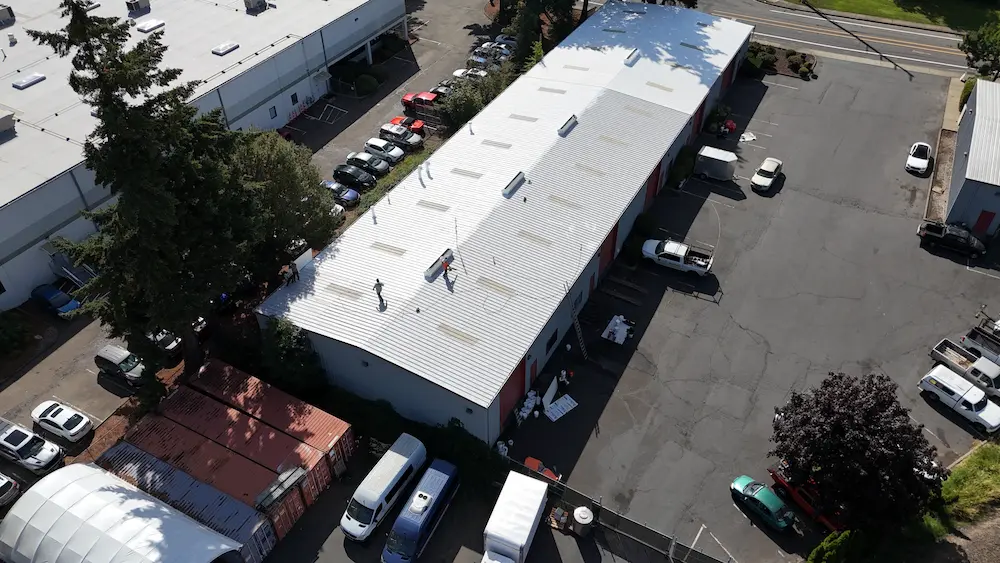
TPO (Thermoplastic Polyolefin) and PVC (Polyvinyl Chloride) are single-ply roofing options for flat to low-sloped roofs. They are both popular choices around Portland for commercial roofing due to their durability and longevity, but also an option for homeowners with flat-roof homes.



Our climate doesn’t go easy on flat roofs. Winters stay wet, summers bring bursts of heat, and spring and fall can swing 30 degrees in a single day. TPO and PVC systems are built for that kind of punishment.
Both resist UV damage, keep interiors cooler in summer, and stay flexible when the temperature drops. That flexibility is what helps them survive year after year without splitting at the seams.
Here’s what makes them stand out:
We install trusted names like GAF, Elevate, GenFlex, and Duro-Last. With our GAF Gold Elite certification, every install meets top-tier manufacturer standards and qualifies for extended warranty options that many contractors can’t offer.
“Alex and Slavik went above and beyond to make this project work for us. They answered every time I called, were very knowledgeable and did a great job. I’ll continue to use them for all of our projects in the future. Thank you guys!”
- John O.
“Slavik was a great PM. The process was easy, quick and very efficient. The company was very professional and everything was done in a timely matter. Would definitely recommend them for their roofing services.”
- Katie B.
“The entire team at Greater Purpose were excellent to work with. Highly professional, communicative, and completed the project within budget and sooner than expected!!!”
- Cory M.
“Working with Alex and Greater Purpose was easy, professional and reasonably priced. All communications were timely and accomplished with ease. GP came highly recommend from a family friend - and architect in the construction business. I would very highly recommend Alex and GP for your roofing needs.”
- Kevin K.
“The team at Greater Purpose Roofing has completed three separate projects for us, and every experience has been excellent. They’re consistently respectful, provide fair and transparent quotes, show up on time, and carry out their work with a high level of professionalism. I wouldn’t hesitate to recommend them.”
- Mira K.
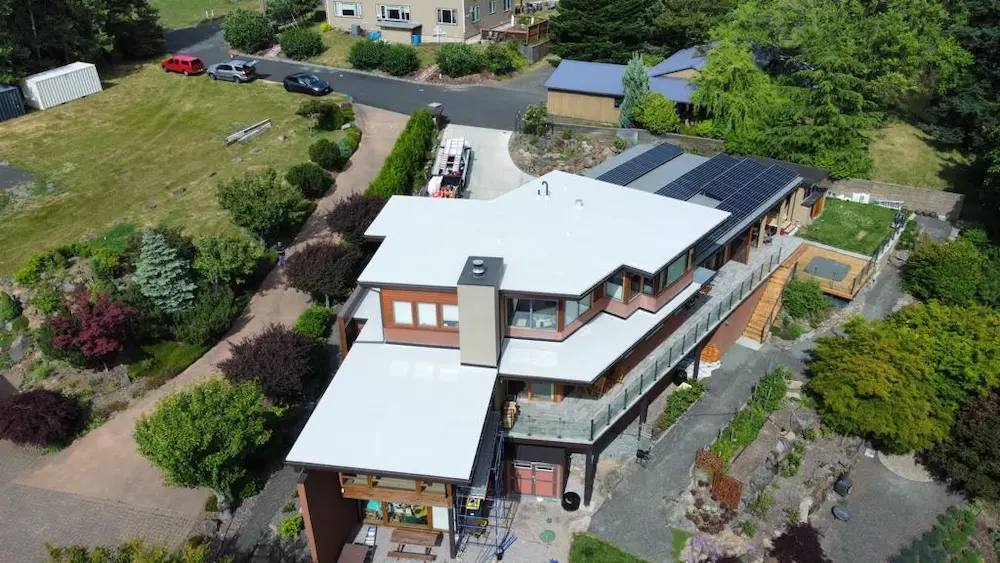
“We had a very unique residential roof that needed to be replaced. It had a TPO roofing system, which is typically used on commercial buildings. The roof had been tarped, and most companies that came out to provide a quote wanted nothing to do with the project.
Greater Purpose Roofing sent out an estimator who carefully evaluated the roof and confidently took on the job. Their team was punctual, professional, and did a phenomenal job from start to finish. We highly recommend Greater Purpose for both residential and commercial roofing projects!”
- Development Contracting
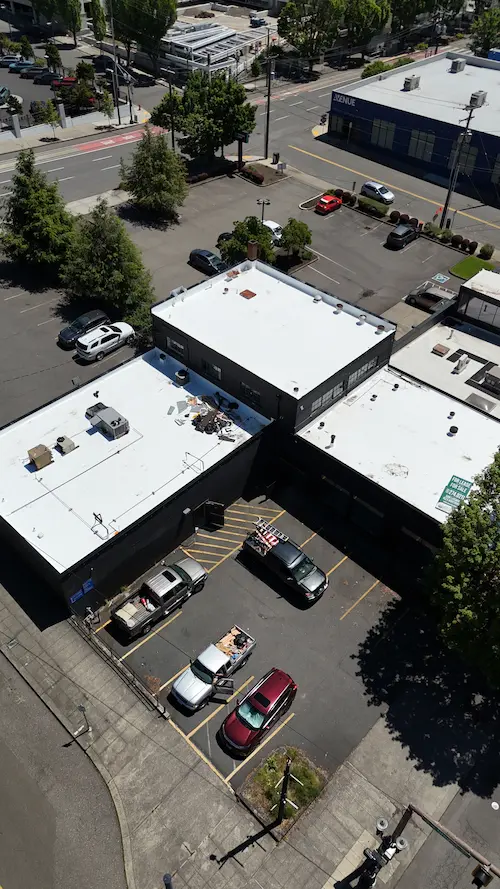
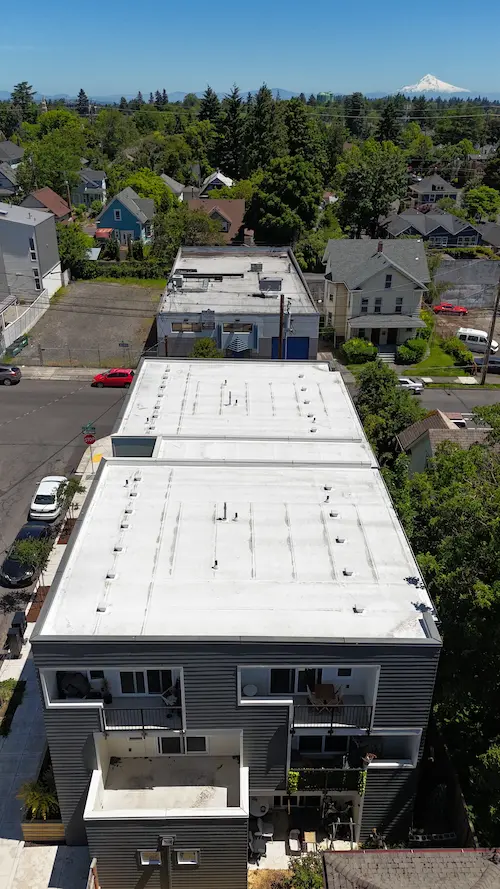
Greater Purpose Roofing provides TPO & PVC Services in and around the greater Portland area. We serve both residential and commercial customers. Whether you need a replacement to an aging roofing system, repair for a leak or damage, or new installation for your new construction home or business, we can help!
Our services include:
As a certified roofing contractor in Portland, we also service and help customers with:
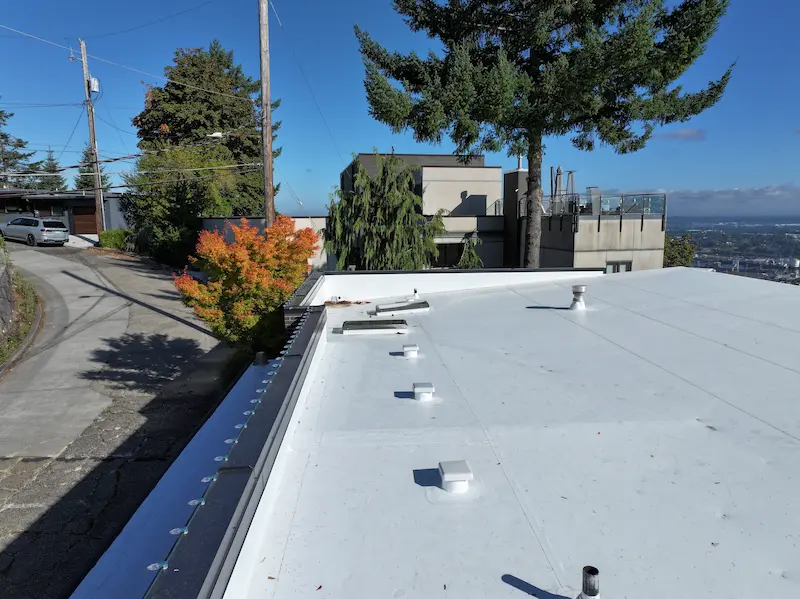
A new TPO or PVC roof isn’t just another maintenance expense; it’s one of the few upgrades that can pay you back in measurable ways. We don’t deal in guesses. Before you sign anything, we run the real numbers for your building and hand them to you in writing.
We factor in:
At Greater Purpose Roofing, we had a client who had high energy costs, and it was time to replace their roofing material. This project was a 10,000 sq. ft. commercial space in Portland, switched from an aging black membrane to TPO. Over five years, they saved about $14,000 in cooling costs and $9,500 in avoided repairs.
We’ll calculate your exact numbers during a free inspection, so you know the return before you decide.
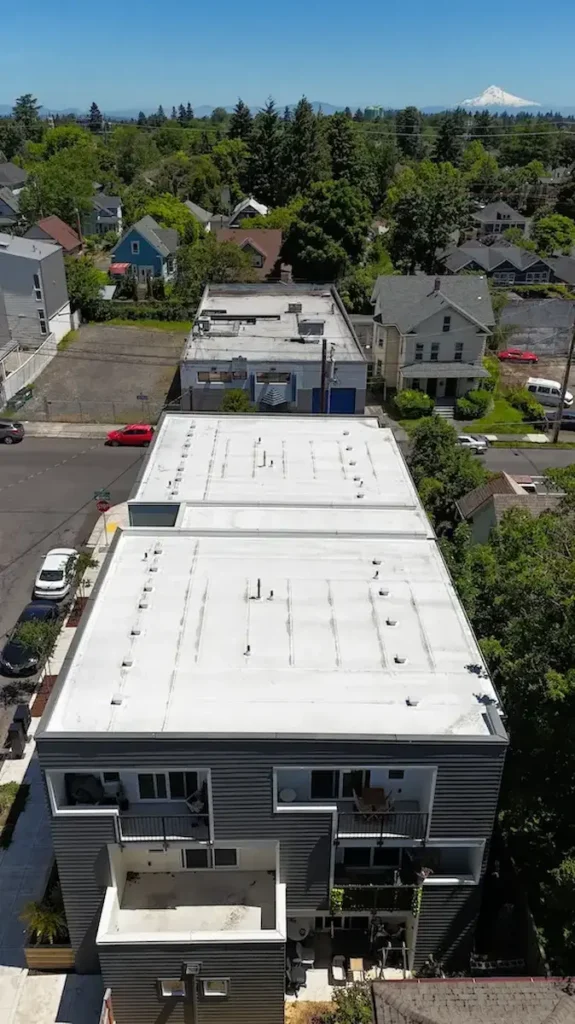
For TPO roofing in Portland, Greater Purpose Roofing is a leading installer and replaces flat roof systems for homeowners and businesses across the metro. Here’s why our customers trust us with their roofing project:
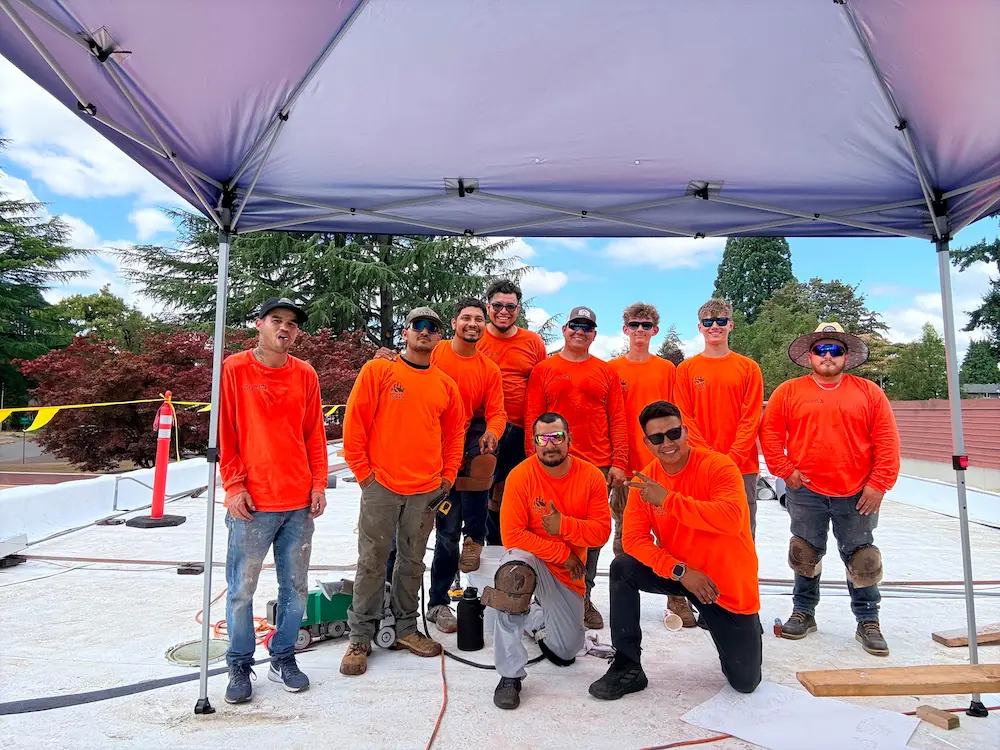
TPO roofing projects don’t need to drag on. Our process is designed to move from inspection to installation without leaving your building exposed.
A typical schedule looks like this:

Site inspection and measurement.

You get a written proposal with scope, cost, and timeline.

Contract approval and material order.

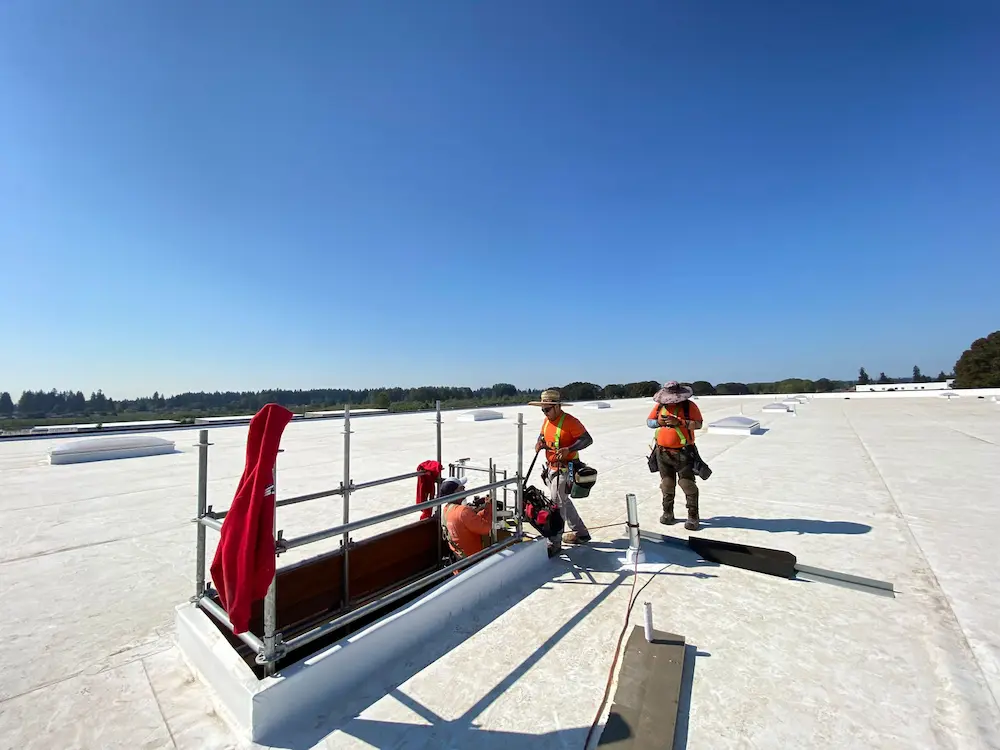
Installation begins (weather permitting). Average install time for most commercial TPO/PVC projects is between 1 and 5 days.

Post-install inspection, registration, and site cleanup.
If your roof is already leaking, we can line up materials and crew scheduling as soon as the estimate is approved, cutting your wait time even further.
EXCELLENTTrustindex verifies that the original source of the review is Google. Very solid company. Very prompt, easy to work with, professional. Great job. Highly recommended.Posted onTrustindex verifies that the original source of the review is Google. Greater Purpose did a re-roof for us after a bad experience with another company. Such a night & day difference, these guys are great! Totally professional and respectful, great communications, great work. They were accommodating on scheduling and shingle color, started on time and finished ahead of schedule. Great cleanup each day, no problems with damage to gutters or siding, and they even send someone out for a follow-up inspection. Highly recommended!Posted onTrustindex verifies that the original source of the review is Google. Greater Purpose Construction, LLC did a great job installing a new roof on our home. They were competitively priced and did exactly what they said they would do in a timely and professional manner. The office staff was very nice, professional and responsive. The workers were friendly, organized and maintained a clean and safe work environment around our house during installation. After our experience, I would feel confident in recommending Greater Purpose Construction to any of my friends or family members. Thank you again! .Posted onTrustindex verifies that the original source of the review is Google. Have been calling this company for something for various project. Anything from looking at a potential repair to complete roof installation. They are quick on getting a number and are communicative. I have also called on getting some basic information on roofing and they guy I spoke to sounded like he was an encyclopedia on the subject, it was really informative and helpful.Posted onTrustindex verifies that the original source of the review is Google. We had a roof by a previous contractor begin leaking and when we were having it replaced, Greater Purpose was one of the companies sent out to bid. They were polite, informative, and helped us know what was going on the best they could. Once we had the approval for the new roof, they were easy to work with, friendly, and did a great job. When we had questions, they were happy to answer. We can't say enough positive things about the experience we've had with the company! Note: In the question about price, it was covered by our previous warranty, so price was between them. However, out of the multiple contractors sent out to look at our roof when it was having issues, they were the ones that felt the most genuine. We asked for them specifically to do it for that reason. Special thank you to Slavic, Alex, and Victor for taking care of us directly. They were all great to work with, and we appreciated their help!Posted onTrustindex verifies that the original source of the review is Google. Greater Purpose is a solid company to work with. We have a leaky old roof and Alex came out quickly to give us an expedited estimate. We ultimately ended up going with a different company but it was a very close call and their bid was quite competitive. Even though we didn’t use their roofing service we were very appreciative of their high quality of service during the bidding process and I can fully recommend working with them if you need a new roof.Posted onTrustindex verifies that the original source of the review is Google. ⭐️⭐️⭐️⭐️⭐️ Great company to work with. Alex was very professional, communicative, and on top of everything throughout the process. He took the time to explain things clearly and was very informative, which made everything easy to understand. The team is friendly, reliable, and easy to work with, and their pricing is very fair. You can tell they care about doing things the right way and taking care of their customers. I would definitely recommend them to anyone looking for a dependable roofing company.Posted onTrustindex verifies that the original source of the review is Google. Greater Purpose did an excellent job with my complete (22 year old) roof tear off and replacement with a new composite roof, patched a few weather-worn boards, and provided a 10-year workmanship warranty at the best price. I'd recommend them wholeheartedly!Posted onTrustindex verifies that the original source of the review is Google. Great and fast communications. Scheduled the work right the way as I requested. The repair looks good. Will wait for heavy rain and see if it solved my problem. Everyone from this company I dealt with was very professional and polite. I definitely can recommend these folks to my friends and others and will use them again if I get a good bid for my next project.Verified by TrustindexTrustindex verified badge is the Universal Symbol of Trust. Only the greatest companies can get the verified badge who has a review score above 4.5, based on customer reviews over the past 12 months. Read more
We don’t throw out “per square foot” guesses that hide surprises later. Every TPO and PVC quote we give is built from a full on-site inspection and a clear breakdown of what’s driving the price.
Here’s what we look at:
When we hand you the estimate, every one of those items is spelled out so you can see exactly where the budget is going. No hidden add-ons once work starts.
Installation typically involves a full roofing system setup designed for flat or low-slope structures. This includes surface preparation, installation of insulation where needed, and applying a single-ply TPO membrane that is heat-welded at the seams for a watertight seal. The system is built to improve energy efficiency, resist UV damage, and provide long-term protection for both residential and commercial buildings.
PVC Roofing is often preferred for buildings that are exposed to grease, chemicals, or heavy rooftop equipment, such as restaurants or industrial facilities. TPO, on the other hand, is commonly chosen for its balance of durability and cost-effectiveness, along with strong energy-saving performance. Both are excellent flat roofing systems, but the right choice depends on your building’s usage, environmental exposure, and budget.
Common warning signs include recurring leaks, visible membrane damage, bubbling or seam separation, standing water after rainfall, or unexplained increases in energy costs. In some cases, targeted repairs may be enough to extend the life of your roof. However, if damage is widespread or the system is nearing the end of its lifespan, a full TPO or PVC roofing replacement may be the more cost-effective solution.
Yes, we provide both TPO and PVC roofing services for a wide range of properties in the greater Portland area. This includes residential homes with flat or low-slope roofs, as well as commercial buildings such as warehouses, retail centers, apartment complexes, and office spaces. Each project is tailored to the structure’s specific needs to ensure long-lasting performance and proper drainage.
Regular maintenance helps maximize the lifespan of both TPO and PVC roofing systems. This usually includes periodic inspections, checking seams and flashing, clearing debris from drains, and addressing small issues before they turn into larger problems. With proper upkeep, these roofing systems can remain durable, energy-efficient, and watertight for many years.